



Pharmaceutical Technology Europe
There are various theories about how to scale up a solid dosage coating operation in a pan coater. This article provides a basic process understanding and scale-up theory based on first principles.

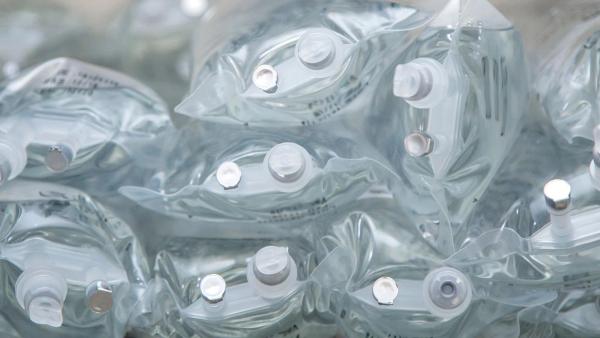
The evolution of therapeutic modalities drives the adoption of single-use technologies.
Despite its understandable hesitancy, the pharma industry is facing a need for more widespread adoption of cloud-based solutions.

Given the criticality of fill/finish processes, it is clear that automation is the next technological step.

Pharmaceutical Technology Europe
There are various theories about how to scale up a solid dosage coating operation in a pan coater. This article provides a basic process understanding and scale-up theory based on first principles.

Readers share their views on bioprocessing challenges, equipment use, and outsourcing trends in our annual bioprocessing equipment and processing survey.

Equipment and Processing Report
My network failed and I had to scrap my batch because my historian did not collect the required data. How do I upgrade the reliability of my network to maintain data continuity if my network fails again?
Equipment and Processing Report
Using blow–fill–seal technology to form and fill a plastic container in a continuous process addresses sterile packaging issues such as package defects, contamination, and process validation.
Equipment and Processing Report
The growing use of high-potency APIs is leading to changes in how the pharmaceutical industry looks at containment.
Equipment and Processing Report
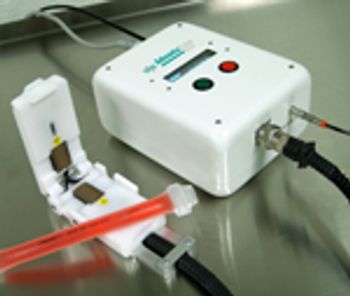
PharmTech's monthly newsletter, Equipment and Processing Report, reviews the Editor's Picks for the April 2012 edition from AdvantaPure and Fitzpatrick Company.
FDA has released a final guidance describing cGMP for preparing media fills for validation of aseptic preparations for positron emission tomography drugs.
As part of an ongoing collaboration into tabletting science, I Holland and the UK's University of Nottingham have launched a two-year programme to investigate the cause of tabletting sticking.
On Mar. 29, 2012, the Generic Pharmaceutical Association reiterated its call for Congress to move forward with user-fee proposals for generic drugs and biosimilar products.
With around 80% of APIs manufactured outside the US, many in developing nations without strong regulatory oversight.

Pharmaceutical Technology's annual survey on equipment and machinery reveals the spending levels and type of spending made in 2011 and planned for 2012.

In Part III of a three-part article, the authors examine various degradation routes of APIs, impurities arising from interactions in formulations, metabolite impurities, various analytical methods to measure impuritie, and ways to control impurities.

Critical issues that should be considered when scaling up a hot-melt extrusion process.

Collaboration can begin with a conversation.
With financing constrained, biotechnology firms must find ways to sustain innovation.

Contract API manufacturers and fine-chemical producers roll out capacity and service expansions.

How to use geographic diversification and legacy technology transfers to avoid product shortages.
Visitors will see many packaging innovations at the annual industry exhibition.

Failure to disclose info may work sometimes, but eventually every question will be answered.
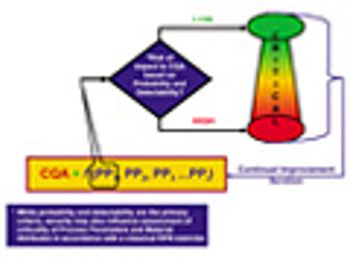
The authors provide an overview of the new ISPE Guide Series on Product Quality Lifecycle Implementation and how the guides can be used in a complementary way with existing guidance from FDA and the International Conference on Harmonization.

A Q&A with Erik van den Berg, CEO of AM-Pharma, on recent industry trends.
Experts discuss the best practices for developing a QbD-based lyophilization process.

Soaring opioid use creates challenges for new drug development and supply-chain control.

China's drug-distribution network has been a mess for years, but government reforms and industry focus are unveiling new opportunities for market order and growth.

The contract provider needs to know as much as the NDA holder.