
With the economy down and multinational firms capitalizing on patents in developing countries, India's R&D sector still has a long way to grow.

With the economy down and multinational firms capitalizing on patents in developing countries, India's R&D sector still has a long way to grow.
Pharmaceutical Technology Europe
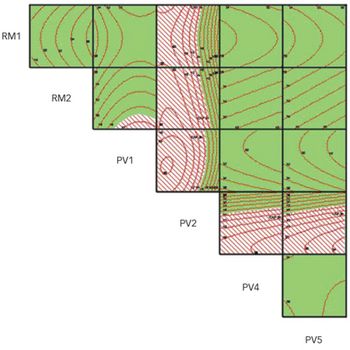
When applied as part of a structured approach, predictive modelling can provide deep process and product understanding, and can enable true, continuous process validation as envisioned by ICH guidelines.
Pharmaceutical Technology Europe
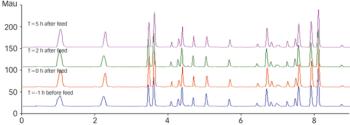
PAT guidance has been available from FDA for more than 4 years, but there have been no apparent breakthroughs in large-scale upstream production. Will companies consider using on?line chromatography to change this?

ePT--the Electronic Newsletter of Pharmaceutical Technology
The US Food and Drug Administration stated its considerations in regards to the three draft annexes to the International Conference on Harmonization's Q4B document.
ePT--the Electronic Newsletter of Pharmaceutical Technology
The US Food and Drug Administration has released a draft guidance for industry entitled Influenza: Developing Drugs for Treatment and/or Prophylaxis.
ePT--the Electronic Newsletter of Pharmaceutical Technology
The US Food and Drug Administration posted the Prescription Drug User Fee Act (PDUFA) IV Drug Safety Five-Year Plan on its website.
ePT--the Electronic Newsletter of Pharmaceutical Technology
The US Food and Drug and Administration and the International Serious Adverse Event Consortium (SAEC) released last week the first data on certain types of genetic-based adverse drug events.
ePT--the Electronic Newsletter of Pharmaceutical Technology
After two years of hearings, more than 5000 pages of expert testimonies, and 939 medical articles, a special federal court ruled that there was little, if any, evidence to support the claim that substances in the measles, mumps, and rubella vaccine (including the use of thimerosal) had led to the autism of three children.
ePT--the Electronic Newsletter of Pharmaceutical Technology
Congress and health policy groups have been pushing for and debating the merits of comparative effectiveness studies for years. Now, the freshly signed 2009 economic stimulus bill devotes $1.1 billion of the total $787 billion plan to this type of research.
The stimulus bill expands the healthcare safety net while boosting investment in health IT and comparative research.
Equipment and Processing Report
To implement QbD and reduce business risks, teams should begin QbD collaboration early during process development.
ePT--the Electronic Newsletter of Pharmaceutical Technology
The US Food and Drug Administration sent letters to manufacturers of certain opioid drug products, indicating that these drugs will be required to have a Risk Evaluation and Mitigation Strategy (REMS).
ePT--the Electronic Newsletter of Pharmaceutical Technology
The US Food and Drug Administration withdrew this week its direct final rule on Reporting Information About Authorized Generic Drugs.
ePT--the Electronic Newsletter of Pharmaceutical Technology
Taro Pharmaceuticals received a warning letter from the US Food and Drug Administration last week regarding its Brampton, Ontario, manufacturing facility.
ePT--the Electronic Newsletter of Pharmaceutical Technology
The US Food and Drug Administration issued its first approval for a biological product produced by genetically engineered animals.
ePT--the Electronic Newsletter of Pharmaceutical Technology
Congressman John D. Dingell (D-MI) introduced HR 759, known as the Food and Drug Globalization Act of 2009, which would amend the Food, Drug, and Cosmetic Act to address food, drug, and device safety, including registration of producers of drugs and applicable fees, documentation for admissibility of drug imports, country of origin labeling, and the inspection of producers of drugs and active pharmaceutical ingredients (API).
ePT--the Electronic Newsletter of Pharmaceutical Technology
Also, PPD to acquire AbC.R.O.; Bilcare Global Clinical Supplies named Tony Moult general manager of Bilcare GCS Europe; more...
ePT--the Electronic Newsletter of Pharmaceutical Technology
The United States Pharmacopeial (USP) Convention is pursuing greater collaboration with the US Department of Health and Human Services (HHS), and specifically, the US Food and Drug Administration.
ePT--the Electronic Newsletter of Pharmaceutical Technology
GS1 UK, an independent organization that develops supply-chain standards, successfully completed the Pharma Traceability Pilot program and demonstrated the viability of a complete track-and-trace system for pharmaceutical products in a live, international supply-chain environment.
ePT--the Electronic Newsletter of Pharmaceutical Technology
The US Pharmacopeial (USP) Convention has announced new standards for heparin and glycerin.
ePT--the Electronic Newsletter of Pharmaceutical Technology
Former Senate Majority Leader Tom Daschle withdrew his name from consideration for US Secretary of Health and Human Services (HHS).
Without any GMP guidelines for excipients in Europe, change can't come soon enough for some industry groups.

GMP experts act fast to resolve some unusual and difficult problems.

The author defines sanitizers, disinfectants, and antibiotics, and examines the question of whether the rotation of disinfectants is scientifically warranted.
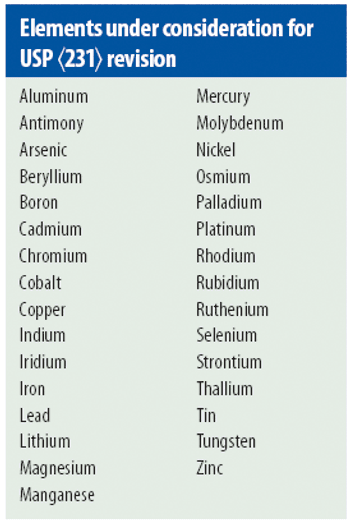
USP <231> Heavy Metals is transitioning toward the incorporation of modern quantitative technologies, but there is still much to be resolved.