
The authors summarize the current regulatory expectations regarding the number of PPQ batches required and provide potential approaches that can be used to determine and justify the number of PPQ batches.
Accurately targeted immunotherapies through reliable neoantigen recognition enable personalized medicine development.
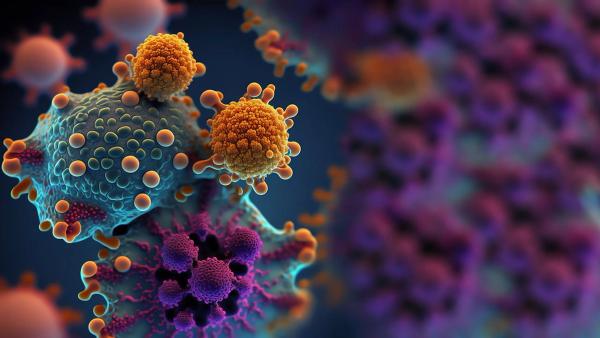
Activation and expansion are essential for success in both autologous and allogeneic therapies.
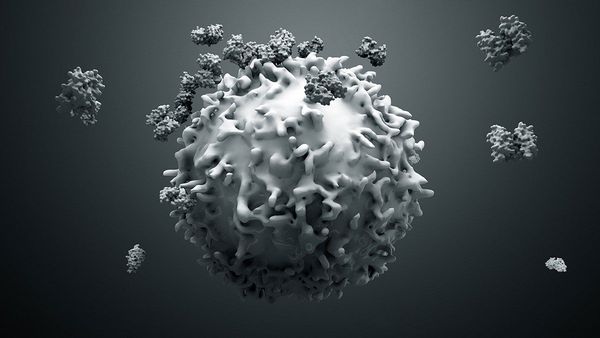
Continuous manufacturing and a quality-by-design development approach are a natural fit.

The authors summarize the current regulatory expectations regarding the number of PPQ batches required and provide potential approaches that can be used to determine and justify the number of PPQ batches.

Efficient synthesis of complex cannabinoids is possible while avoiding marijuana cultivation.

Spectrum Pharmacy Products opens pharmacy institute for training in pharmaceutical compounding.
Microdermics will focus on product development and clinical activities of new drug delivery methods, while Vetter’s primary role will be in the fill and finish aspect.
BioVectra will open its new microbial fermentation and complex chemistry site, including the capability to handle high-potency APIs, by the end of 2017.
The company will expand its production facilities in Carlow and Cork to meet increased global demand for its medicines and vaccines produced in Ireland.
Ablynx will receive EUR15 million in milestone payment following Merck’s decision to advance ALX-1141 into clinical development. The nanobody was developed by Ablynx under a 2011 collaboration between both parties.
The compendium provides a resource to identify and locate targeted suitable patient-derived xenografts based on specific histology and molecular properties.
Catalent has signed an agreement with Therachon to support preclinical and clinical development of TA-46, a novel protein being developed to treat achondroplasia.
Effective cleanroom disinfection programs require extensive testing and evaluation processes. A three-step process can help ensure that the cleanroom environment will satisfy regulatory requirements and be safe for biopharmaceutical manufacturing.
Understanding the purpose of the biological indicator can guide the development of an effective sterilization process.
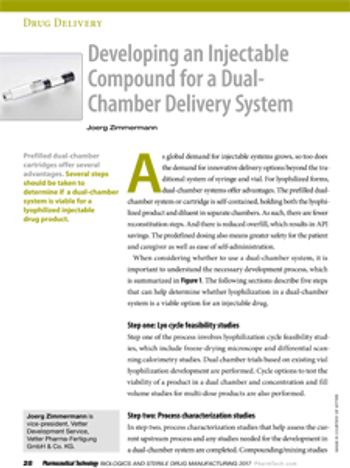
Prefilled dual-chamber cartridges offer several advantages. Several steps should be taken to determine if a dual-chamber system is viable for a lyophilized injectable drug product.
The agency released its report on pilot project to involve patients in the assessment of medicines.
Biomedical researcher shares insights from a career dedicated to advancing therapeutic innovations for unmet medical needs.
The company is the first multi-site excipient supplier to achieve accreditation across production facilities.
Recent legislation and PDUFA initiatives aim to streamline oversight and testing requirements.

Advances in chemical synthesis are enabling greener, more cost-efficient processes for API manufacturing.

Transdermal and inhaled/nasal delivery provide alternative routes of administration for macromolecules.
A new study from the United States National Institutes of Health (NIH) found that pairing the antidepressant amitriptyline with drugs designed to treat central nervous system diseases, enhances drug delivery to the brain by inhibiting the blood-brain barrier in rats. The blood-brain barrier serves as a natural, protective boundary, preventing most drugs from entering the brain. The research, performed in rats, appeared online April 27, 2017 in the Journal of Cerebral Blood Flow and Metabolism.

Catalent combines its formulation expertise, manufacturing excellence and particle size reduction technologies to provide a broad range of solutions in the development of inhalation and nasal drug products.
Sandoz, a Novartis division, announced that the Committee for Medicinal Products for Human Use (CHMP) has adopted positive opinions recommending the approval of its biosimilars rituximab and etanercept in Europe, for the same indications as the respective reference medicines.
In implementing quality by design for drug formulation, it is crucial to identify the critical properties of excipients and understand how their variation affects the final drug product.
The funding allows the company to broaden its range of services and finance its move to new laboratory facilities in the Illkirch-Graffenstaden innovation park in northeast France.
Cobra will increase capacity in response to customer demand for DNA and viral vector production.
The two companies will develop translational biomarkers for fibrotic diseases, including non-alcoholic steatohepatitis (NASH).