





Outsourcing
Latest News
Advertisement
Pharmaceutical Outsourcing Present and Future
Contract service providers must step up their game to stay competitive in increasingly complex bio/pharma market.

Navigating the Preclinical CRO Outsourcing Process
The need for preclinical testing expertise is growing as molecular complexity increases.

A Closer Look at Affinity Ligands
A look at the newest innovations offers a deeper understanding of affinity ligands and their role in the future of downstream processing.

Latest Videos

Advertisement
More News

Even with, or perhaps because of, the rapidity with which changes in United States policy are developing, many in the bio/pharmaceutical industry are taking a longer view.

Lack of skills in the AI realm was a distant second among those surveyed about the biggest barrier to innovation while using the technology.

Bringing in external expertise may be necessary when internal knowledge is lacking, but it is critical that any contract employee or consultant is comprehensively assessed to ensure the right person is employed.
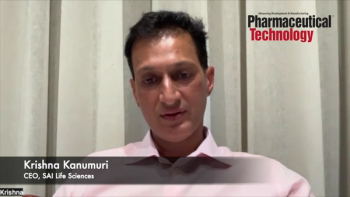
Pharmaceutical Technology® spoke with Krishna Kanumuri, CEO of Sai Life Sciences, about which trends from 2024 will carry over and impact the bio/pharma industry in 2025.
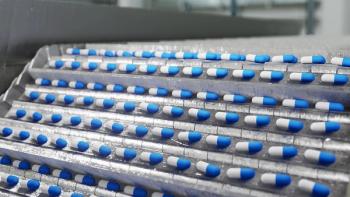
The move towards “pharma 4.0” requires a major shift, both ideologically and technologically, to adapt current processes to a framework that will automate much of today’s manufacturing.
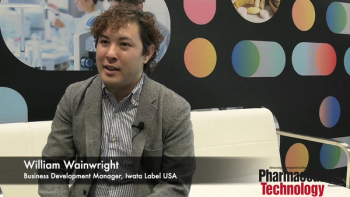
William Wainwright, business development manager at Iwata Label USA, discusses the practical security benefits of functional labels at INTERPHEX 2025.

With advanced manufacturing, BioPure’s BioClamp connector is manufactured to be 13% lighter than the previous model, resulting in a 26% reduction in carbon dioxide emissions across the full lifecycle of the product.

Winners are selected entirely through industry voting, with those honored representing recognition by their peers.
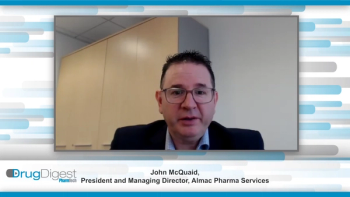
In this exclusive Drug Digest video interview John McQuaid from Almac Pharma Services and Sridevi Khambhampaty from Shilpa Biologics delve into the evolution of the bio/pharma outsourcing market and look at how service-providers’ strategies have adapted to meet demand.
In the latest of a series of warning letters to India-based API manufacturers, FDA issued a warning letter to Aspen for deviations in CGMP in the production of APIs.
The Biotechnology Innovation Organization’s new membership survey said that 90% of US biotech companies rely on imported components for at least half of their FDA-approved products.

With a completed €40 million (US$43 million) investment in Slovenia, Novartis has opened its first specialized viral vector production facility in Europe, following earlier significant investments in R&D that has led to the growth of Slovenia’s workforce.
Russell Miller, vice-president of Global Sales & Marketing at Enzene, explains that continuous bioprocessing is poised to change biologics manufacturing moving forward.
Pharmaceutical Technology® sits down with Henny Zijlstra from Adragos Pharma to chat about the trends affecting the outsourcing market, various strategies being employed by service providers, and the value of end-to-end services.
PharmTech Group sat down with Anil Kane of Thermo Fisher Scientific live on site at DCAT Week 2025, to talk about technologies and digital solutions companies are using to meet demand across the bio/pharma industry.
PharmTech Group interviewed Lee Karras of Noramco live on site at DCAT Week 2025, shortly after the company announced a $25 million investment in sterile injectable manufacturing capabilities at its Halo Pharma facility in New Jersey.
The Member Company Announcement Forum is the kickoff event of the annual DCAT Week in New York City, which is being held from March 17–20.
This model is being positioned by Shilpa as a dual approach that offers comprehensive discovery, clinical, and commercial outsourcing services in addition to commercially ready, “off-the-shelf” novel formulations for b2b licensing.
The company plans to add 16,000 pallet spaces to the 13,000 it already has on site, making for a total of 68,000 pallet spaces covering various temperature requirements.

The multi-year strategic partnership is intended to support commercial demand of Viking Therapeutics’ GLP-1 candidate, VK2735.
The company’s 100,000-sq.-ft. space is expected to enhance its capabilities for commercial oral dose treatment manufacturing in a variety of therapeutic areas.
The investment is intended for the Halo Pharma facility in Whippany, NJ, and aims to help relieve capacity shortages in the injectable supply chain in the United States.
The €4 million (US$4.3 million) project is current good manufacturing practice compliant, and includes an accompanying cartoning machine.

More and more contract manufacturers have been looking not at what the state of the supply chain is right now, but what it may be in the next three to five years.
The company first announced its intention to build the state-of-the-art facility as part of a €900 million investment in July 2024.
Advertisement
Advertisement
Trending on Pharmaceutical Technology
1
Women in STEM: Early Phase Drug Development
2
Drug Digest: Outsourcing Partnerships Fuel Global Biopharma Discovery and Scale-Up
3
FDA Grants Priority Review For Pfizer’s Marstacimab for Hemophilia A or B
4
PharmTech Weekly Roundup - February 6, 2026
5