
The companies have been awarded a collaborative grant of £1.9 million (US$2.6 million) from Innovate UK.
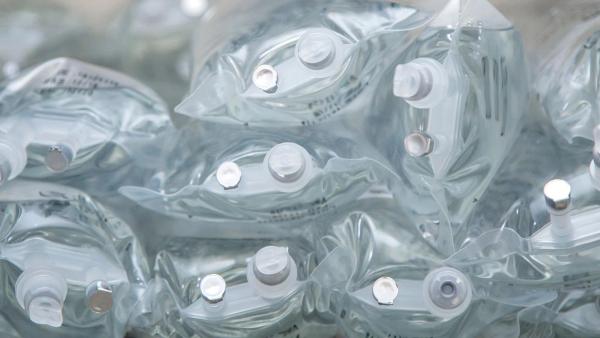
The evolution of therapeutic modalities drives the adoption of single-use technologies.
Despite its understandable hesitancy, the pharma industry is facing a need for more widespread adoption of cloud-based solutions.

Given the criticality of fill/finish processes, it is clear that automation is the next technological step.
The companies have been awarded a collaborative grant of £1.9 million (US$2.6 million) from Innovate UK.
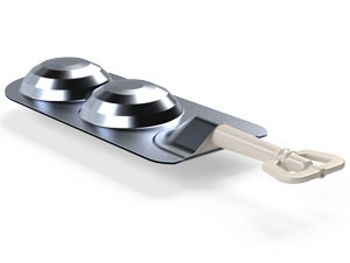
The Multi-Chamber Blister System is a blister package that incorporates Amcor's SafeMix cold form laminate to transport vaccines and sensitive APIs without the need for cool storage.
The company has made an equipment donation to Purdue University's continuous manufacturing research program.
The Honeywell Connected Plant Asset Performance Insight helps manage maintenance and operations by connecting assets and equipment to the cloud and applying analytical models to avoid unplanned downtime.
The Awards honor innovations in drug delivery and packaging, for better patient safety and compliance.
Amgen plans to invest approximately $300 million in a new biomanufacturing plant in the United States.
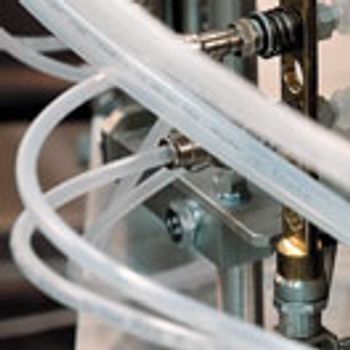
Layout and supply details must be considered when implementing a fully disposable biopharmaceutical manufacturing process.

A systematic framework and software are needed to implement material traceability in continuous pharmaceutical tablet manufacturing.
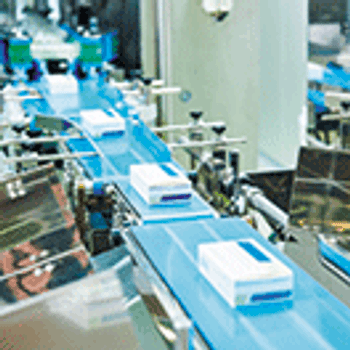
The following study describes a methodology to establish, control, and characterize an aerosolized bioburden within a test chamber and determine the settling rate of the bioburden.
New technologies, such as NIR and Raman, enable online measurements of blending and content uniformity in the production of solid dosage forms.

Experts share insights on the various methods used for purity and impurity analysis of therapeutic proteins.
Shire will receive exclusive license to develop and commercialize AB Biosciences' pan receptor interacting molecule program for autoimmune and inflammatory diseases.
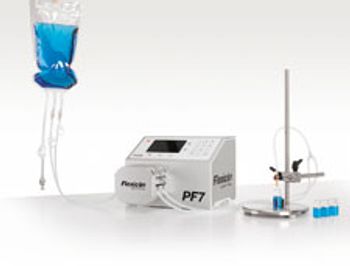
The Flexicon PF7 peristaltic tabletop aseptic liquid-filling machine from Watson-Marlow Fluid Technology Group is suitable for GMP-regulated biotechnology and pharmaceutical operations.
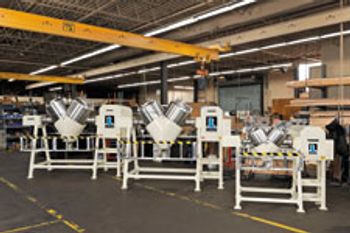
Ross, Charles & Son's Tumble Blenders now offer protective light curtains that provide automatic safety shutoff whenever an operator crosses a defined security boundary.
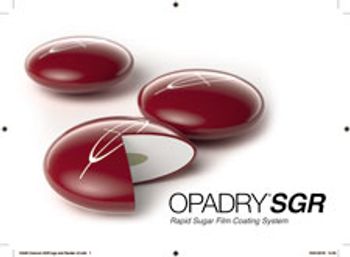
Colorcon's Opadry SGR, Rapid Sugar Film Coating System, is an aqueous, high-gloss sugar film coating system for pharmaceutical products.
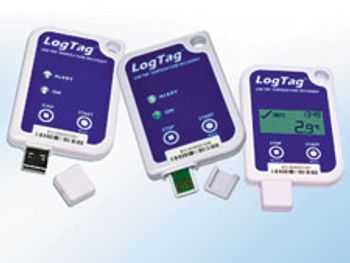
LogTag has added two new devices to its temperature data logger series.
The NECC supervisory pharmacist at the center of the 2012 fungal meningitis outbreak was sentenced to 8 years in prison.
Greater clarity and harmonization in ATMP regulations are needed to promote the development and commercialization of these therapies.
Hospitals form not-for-profit drug company to combat drug shortages and high prices.

Regulations and industry guidelines focus on ensuring excipient safety by specifying risk assessments and shared responsibility.
Proposed guidance documents assist drug manufacturers in qualifying single-use systems for commercial drug production.

While more companies are embracing taggants, researchers are developing new technologies that will be extremely difficult to reproduce.

Industry lessons from a fast-track technology transfer of a soft-gelatin capsule (softgel) are multifold. This case study reviews the success factors for effective execution of the technology transfer, which include: strong relationship between the customer, the contract development and manufacturing organization, and other partners based on deep knowledge in the technology; established and proven quality-by-design processes; risk mitigation management; project leadership; flawless execution; and mutual trust.
A collaboration between The Centre for Process Innovation and The Roslin Institute aims to develop commercially viable and scalable methods of producing biologics using transgenic animals.
Cambrex invests in development and laboratory facilities and adds staff.