

With DKK 600 million (US$87.4 million) in funding from the Novo Nordisk Foundation, the new supercomputer offers the potential to accelerate innovation in drug discovery.
With DKK 600 million (US$87.4 million) in funding from the Novo Nordisk Foundation, the new supercomputer offers the potential to accelerate innovation in drug discovery.
The treatment for ATTR in certain adults with polyneuropathy had just been recommended for approval across the European Union and had gained regulatory approval in the United States at the end of 2023.
A new laboratory will be built in Oss, while additional capacity and capabilities will be added to the Bioanalytical Center of Excellence in Assen.

The partnership will use ViaNautis’ proprietary polyNaut technology platform to develop genetic medicines that can precisely target tissue types.

The company will be expanding its quality control testing capabilities at its San Diego, Calif. biologics development and manufacturing site.
WHO and its partners are providing support to countries dealing with mpox outbreaks.
Pauline Janssen of DFE Pharma gave a presentation on the utility of analyzing big data sets to better understand and diagnose variability in the production process.

The collaboration aims to advance clinical development of a Phase I drug candidate, MRT-6160, and to explore other therapeutic opportunities across multiple indications.
The laboratory is on the same site as BioDuro-Sundia’s new Compound Management Center, which was launched earlier in October 2024.
The report highlights international regulators’ plans for the development and availability of vaccines to prevent and drugs to treat mpox.
Pharmaceutical Technology Europe chats with Kevin Li, MBA, from BioDuro-Sundia about integrated services and the benefits these services can provide to pharma companies.
Vyalev, also known as Produodopa, has been approved in 35 countries, with more than 4200 patients having started treatment.
Merck is acquiring the Yale-spinout, which develops direct DNA modification-enabled cancer treatments.
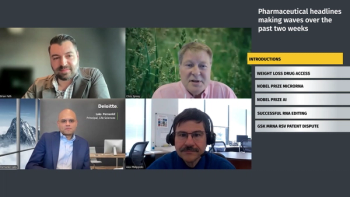
Laks Pernenkil, Brian Feth, and Alex Philippidis go behind the headlines to discuss the impact of recent news, including FDA’s drug shortage list update, Nobel prize winners in microRNA and AI, and a big-potential research win for RNA editing.
In this episode of the Ask the Expert video series, Peter Walters, Fellow of Advanced Therapies at CRB Group, discusses how facilities used for solid dosage manufacturing may be retrofitted into sustainable cell and gene therapy production facilities.

The agreement follows Agilent’s acquisition of Canada-based CDMO BIOVECTRA in July 2024.
Pfizer’s bivalent RSV prefusion F vaccine has been approved to prevent lower respiratory tract disease resulting from the respiratory syncytial virus in adults 18 to 59 years of age who are at increased risk.
The merger will create a specialty company, REGiMMUNE/Kiji TX, for regulatory T cells.
The Cambridge-GSK Translational Immunology Collaboration builds on an existing scientific relationship between the biopharma company and the university, with the aim of improving outcomes for patients.
As many as 30% of people living with severe hemophilia A develop inhibitors such as TFPI, which can be produced by the body’s immune response to clotting factors in replacement therapy, often limiting the effectiveness of that therapy.
Wainzua had been previously approved for use by patients with ATTRv-PN in the United States, under the brand name Wainua.
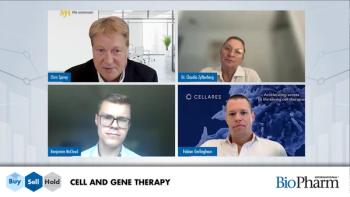
Cell and gene therapy experts Fabian Gerlinghaus, Dr. Claudia Zylberberg, and Benjamin McLeod weigh in on hot topics in CGT.
Cell and gene therapy experts Fabian Gerlinghaus, Dr. Claudia Zylberberg, and Benjamin McLeod weigh in on hot topics in CGT.

Rather than relying on a myriad of different systems, the author proposes that a cloud-based solution can control and coordinate everything, allowing manufacturers to deftly respond when changes in labeling requirements arise.
Redica Systems has been assisting pharmaceutical companies in determining GMP quality risks at their manufacturing sites, and with AI, it has a relatively new addition to its toolbox.
The agency’s CHMP recommended drugs to treatments for hemophilia, two biosimilars for psoriasis, and two flu vaccines at their October meeting.
Xiao-Yan Cai, PhD, co-founder and CEO of Accurant Biotech, discussed collaborative efforts that must be undertaken between companies, and across scientific disciplines, to work together on continuing to develop medicines to save lives.
The agency has reconfirmed its recommendation to not give positive opinion to Translarna (ataluren) after a reexamination of the available data.
Merck will deploy Mestag’s proprietary RAFT platform to investigate the pathogenic role that fibroblasts play in inflammatory diseases.
The design of the center prioritizes integration of the entire supply chain, with the end goals of accelerating product development and autonomous production capacity in alignment with EU priorities.