
Pharmaceutical Technology® spoke with Steve Lowes, senior director of Scientific Affairs at IQVIA Laboratories, ahead of AAPS PharmSci 360 to discuss how LC–MS is used in bioanalysis.
Pharmaceutical Technology® spoke with Steve Lowes, senior director of Scientific Affairs at IQVIA Laboratories, ahead of AAPS PharmSci 360 to discuss how LC–MS is used in bioanalysis.
Long Yuan, PhD, director of the Department of Drug Metabolism and Pharmacokinetics at Biogen, explains how artificial intelligence, machine learning, and large language models are used in performing bioanalysis.
AAPS PharmSci 360 will spotlight AI advances, gene therapy progress, and leading pharma research insights this year, says programming chair Mei He.
Thermo Fisher’s Jennifer Cannon reviews the first year of the company’s Accelerator Drug Development suite of services and the overall experience of attending the CPHI conference.
Frank Romanski of Lonza Capsugel dives into the excipient side of manufacturing and the emerging prevalence of digitalization.

Analysis of FDA 505(b)(2) data (2024–2025) shows 69 drug reformulations, with a focus on enhancing stability and patient comfort, utilizing new dosage forms, and innovative strategies.
Exclusive interviews revealed that digital transformation, data integrity protocols, and a regionalized supply chain are crucial strategies for optimizing drug development and manufacturing efficiency.
Christian Dowdeswell, managing director, Arcinova, a Quotient Sciences company, discusses what makes a CDMO that offers end-to-end service beneficial.
Maggie Saykali reviews the key points of her CPHI Frankfurt presentation on the potential game-changing opportunities of the Critical Medicines Act.
J.D. Mowery, Bora, says global sustainability standards are good, AI implementation demands data cleansing, and outsourcing must mature.
Patient compliance is driving the emergence of new modalities, as Frank Romanski of Lonza Capsugel explains in the first installment of a two-part discussion.
Sriman Banerjee of Takeda Pharmaceuticals says patient adherence is improving thanks to technologies that offer a more personalized approach.
J.D. Mowery discusses boosting pharma supply resilience through localized manufacturing, AI innovation, and critical regulatory standardization.
J.D. Mowery, Bora, says tariffs localize biopharma supply chains, the "biotech freeze" mandates robust data, and AI rapidly optimizes operations.
Maggie Saykali, Cefic, explains that Western pharma vulnerability stems from market loss to Asia, caused largely by short-sighted offshoring due to environmental costs.
SGD Pharma’s Najet Mebarki provides an overview of more than a half dozen services, products, and treatments, including ready-to-use solutions.


Gustavo Ferrer, MD, explains how AI accelerates drug development and manufacturing, streamlining clinical data into actionable pharma insights.

A panel at CPHI Frankfurt discussed how AI is transforming pharma talent, necessitating rapid upskilling, bias mitigation, and regulatory changes.
Nigel Langley of gChem stresses excipient innovation, safer solvents, and supply chain resilience for pharma’s future in part 2 of a 2-part interview related to his presentation at CPHI Europe 2025.
Eva-Maria Hempe, NVIDIA, says AI collaboration optimizes life science research via routine automation, freeing human experts for complex strategy, ethics, and exploring scarce data.
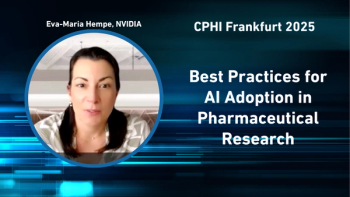
Eva-Maria Hempe, NVIDIA, says AI platforms must integrate R&D data, overcoming silos, with adoption demanding a centralized strategy and change management.

CPHI 2025 awards spotlight progress in pharmaceutical manufacturing, API development, automated processing, and sustainability driving future production.
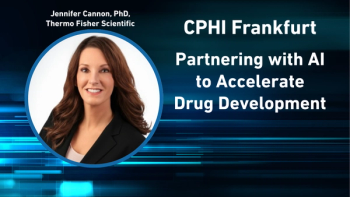
As Thermo Fisher’s Jennifer Cannon explains in this first part of a two-part interview, the collaboration is intended to help improve the speed and success of drug development.
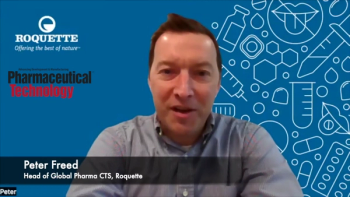
Pharmaceutical Technology® spoke with Peter Freed, head of Global Pharma CTS, Roquette, about a variety of materials-related topics including protein stability, tablet coating, sustainability, and securing the supply chain.
Maggie Saykali, Cefic, emphasizes the importance of competitiveness and innovation for European manufacturers to create added value and maintain environmental standards.
Nigel Langley of gChem discusses the company’s DMSO, proactive pharma strategies, and more in part 1 of a 2-part interview related to his presentation at CPHI Europe 2025.

ACG showcased the expansion of its European presence, and Bora Pharmaceuticals participates in a discussion about CDMO innovation.
Eva-Maria Hempe, NVIDIA, says bio/pharma must centralize AI strategy, tackle silos, prioritize process integrity, and balance quick wins with long-term drug design goals.
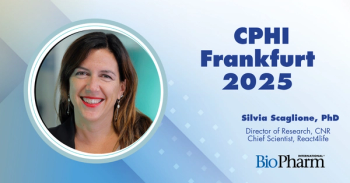
React4Life’s Silvia Scaglione emphasizes how organ-on-chip tech and AI are reshaping drug testing, personalized treatment, and the future of bio/pharma innovation.