
The UK’s MHRA has granted marketing authorization for Novartis’ radioligand therapy, Pluvicto, for the treatment of advanced prostate cancer in Great Britain.
The UK’s MHRA has granted marketing authorization for Novartis’ radioligand therapy, Pluvicto, for the treatment of advanced prostate cancer in Great Britain.
A case study discussing why post-approval changes present a very low risk, and therefore can be downgraded from a prior-approval to a notification after implementation and managed in the PQS with immediate implementation effect.
The United Kingdom has approved Moderna’s bivalent COVID-19 vaccine, which targets the original variant and Omicron.
Moderna and the European Commission have amended their agreement to convert contractually agreed doses of Moderna’s COVID-19 vaccine to the company’s Omicron-containing bivalent vaccines for supply in 2022.
Roche announced that FDA has approved Roche’s Xofluza (baloxavir marboxil) to treat influenza in children aged five years and older.
Daiichi Sankyo’s Enhertu (fam-trastuzumab-deruxtecan-nxki) is the first targeted therapy for HER2-low breast cancer.
Guest contributor B.S. Sathya Durga discusses the importance of modernizing India's pharmaceutical manufacturing industry.
FDA’s CDER SBIA is hosting a three-day virtual conference regarding regulatory best practices for global access to medicines.
FDA has approved Coherus’ Cimerli (ranibizumab-eqrn) as an interchangeable biosimilar for all five indications of Lucentis.
Democrats approve curbs for Medicare plans, but not for commercial drug coverage.
The European Commission has approved AstraZeneca and Merck’s Lynparza (olaparib) as an adjuvant treatment for BRCA-mutated HER2-negative high-risk early breast cancer.
Better clinical data are needed, as well as strategies for tackling opioid abuse, tobacco use, and food safety.
Pharmaceutical Technology spoke with Niamh Lynch, Executive Director, Global Head of Quality, Lonza Small Molecules, Basel about best practices for API quality and the impact of the nitrosamine contamination situation.
A comprehensive understanding of potential material change can mitigate its impact on patient safety.

The nitrosamines contamination in “sartan” drugs emphasized the importance of risk assessment in the manufacture of active pharmaceutical ingredients.
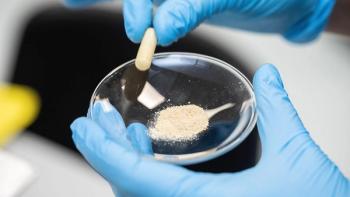
This article reviews sources of excipient variability, including raw materials and processing, both of which may vary from supplier to supplier and from plant to plant for a single manufacturer.

Successful digital transformation in biopharma requires an integrated approach to the data lifecycle.

Screening for apparent total nitrosamine content with a thermal energy analyzer offers a rapid way of identifying contaminated drug products.
Pharmaceutical Technology Europe spoke with representatives from the European Directorate for the Quality of Medicines & Healthcare (EDQM) about API quality from their perspective.
FDA and the USPTO hope to promote competition by challenging strategies designed to block timely approval of generics and biosimilars.
Pharmaceutical Technology spoke with Ed Gump, VP Small Molecules at the US Pharmacopeia (USP) about API quality from the standards perspective.
Pharma’s leveraging real-world evidence to drive product approval, reimbursement, and market access.
Susan J. Schniepp, distinguished fellow at Regulatory Compliance Associates, answers some commonly asked questions about biologics license applications.
FDA’s hybrid inspection model will remain a regular means for supplementing onsite inspections and will be further integrated into the agency’s oversight operations.
How can we fix the quality manufacturing issues that come with product shortages?