

Pharmaceutical Technology® spoke with Todd Sprouse, associate director, Analytical Services, and Erik Feldmann, PhD, principal technical advisor, Client Solutions & Proposals, both with Cambrex, to find out more about the challenging situation.
Susan Haigney is lead editor of BioPharm International®.
Pharmaceutical Technology® spoke with Todd Sprouse, associate director, Analytical Services, and Erik Feldmann, PhD, principal technical advisor, Client Solutions & Proposals, both with Cambrex, to find out more about the challenging situation.

The two organizations are collaborating on an integrated translational biology platform for the development of radiopharmaceuticals.

Bram Baert, global head of Regulatory Affairs at Lonza CHI, gives his perspective on the impact of the EC’s decision on the use of TiO2 in drug products.

Susan J. Schniepp, Distinguished Fellow, Regulatory Compliance Associates, joins PDA CEO Glenn Wright and Melissa Seymour, Executive Vice President, Global Quality, Eli Lilly and Company, to talk about the regulatory and quality topics discussed at the 2025 PDA Regulatory Conference.

Digital solutions help pharmaceutical manufacturers navigate the complex supply chain.

EMA and WHO have collaborated for a decade, with WHO utilizing EMA’s scientific expertise to fulfill its mandate to improve access to safe and effective medicines.
Unichem Pharmaceuticals has issued a voluntary recall of Cyclobenzaprine Hydrochloride Tablets USP 10 mg after the incorrect label was placed on the wrong product.

In this episode of the Ask the Expert video series, Susan J. Schniepp, distinguished fellow at Regulatory Compliance Associates, talks to Piet Christiaens, PhD, scientific director, E&L expert at Nelson Labs, and Dennis Jenke, PhD, principal consultant for Nelson Labs and chief executive scientist, Triad Scientific Solutions, about extractables and leachables and the testing required for each.
The laboratory services provider is responding to growing demand for packaging and microbiological testing by expanding its laboratory space at its Wiesbaden, Germany, facility.
To find out how FDA’s new draft guidance, Oncology Therapeutic Radiopharmaceuticals: Dosage Optimization During Clinical Development, may impact the development of radiopharmaceuticals as cancer treatments, Pharmaceutical Technology® spoke with Michael Ritchie, chief commercial officer of Champions Oncology.

The company will be adding a 160,000-square-foot dedicated manufacturing facility at the FUJIFILM site in Holly Springs, NC.
Pharmaceutical Technology® spoke with C. Michael White, distinguished professor and Chair of the Department of Pharmacy Practice at the UConn School of Pharmacy and chair of the Kratom Consumer Advisory Council, about recent government actions regarding kratom and concentrated 7-hydroxymitragynine (7-OH) products.

FDA’s recommendation to control 7-OH products under the Controlled Substances Act should help prevent competition between legitimate pharmaceutical medicines and those companies looking to circumvent FDA regulations, says Michael White, Distinguished Professor and Chair of the Department of Pharmacy Practice at the UConn School of Pharmacy and Chair of the Kratom Consumer Advisory Council.
The guidance document provides recommendations for identifying an optimized dosage for radiopharmaceutical therapies for cancer treatment during clinical development.
The company will highlight how its GMP services combine engineering, consulting, equipment qualification, and facility validation to better integrate its services during Farmaforum, which is being held in Madrid from Sept. 17–18, 2025.
Based on an analysis done by the European Medicines Agency on the feasibility of alternatives, the European Commission maintains use of titanium dioxide in drug products.
Florida’s emergency rule will classify certain concentration forms of 7-hydroxymitragynine opioid products as Schedule 1 controlled substances in Florida, a step FDA recommended for 7-OH opioids in July 2025.
The agency’s new program is designed to increase regulatory predictability and streamline review of domestic manufacturing facilities.
The investment will expand the company’s manufacturing and packaging capabilities at its Maple Grove, Minn. site, which Bora acquired in 2024 with its acquisition of Upsher-Smith Laboratories.
The acquisition expands the CDMO’s small-molecule API development and manufacturing services in the US.
Radiopharmaceuticals are moving from their standard use of treating superficial tumors into radio drug conjugates that target tumors without impacting other cells in the body.
The changes, required for safety labeling of all opioid drugs, will emphasize the risks with long-term use to combat misuse and addiction.
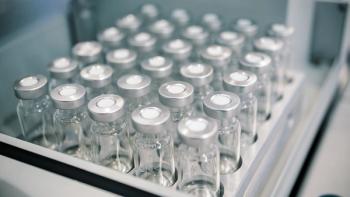
Modular process design, single-use technologies, and flexible filling lines are some of the ways manufacturers can combat challenges involved in small-batch manufacturing.
The two companies have entered into an agreement to develop respiratory, immunology, inflammation, and cancer therapies.
The agency has given a positive recommendation for a change in the gas propellant in Trixeo Aerosphere and Riltrava Aerosphere that will have a 1000-fold reduction in global warming potential compared to the current propellant.

The company will build a multi-billion-dollar drug manufacturing center in Virginia that will focus on chronic diseases, as well as facilities in California, Indiana, Maryland, Massachusetts, and Texas.
George Francis Tidmarsh, MD, PhD, founding co-director of Stanford’s Master of Translational Research and Applied Medicine program, has been appointed as the new director of the Center for Drug Evaluation and Research.
The agency’s Executive Steering Group on Shortages and Safety of Medicinal Products has issued recommendations to address vulnerabilities in the supply chain of anti-D immunoglobulins.
The company is voluntarily recalling one lot of cefazolin for injection, USP, 1 gram per vial due to customer complaints of the wrong product being included in a carton.
The company is expanding its US manufacturing and R&D capabilities with a $1 billion investment by 2030.