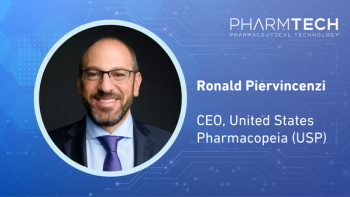

Michael Levy, senior vice president, Digital & Innovation, USP, explains the digital supply chain in a preview of his upcoming CPHI Milan panel presentation, The Next Phase of Pharma Supply Chains.
BioReliance has introduced select in vitro ADME (absorption, distribution, metabolism and excretion) and toxicology testing services its service offering. The company#&39;s range of predictive assays use a novel suite of genetically modified cell lines created with CompoZr zinc finger nuclease (ZFN), a Sigma-Aldrich proprietary technology.
“The new in vitro ADME and toxicology testing services complement the existing genetic toxicology testing portfolio at BioReliance, and have been designed to meet the growing demand for more predictive human cell-based assays,” said Daniel Aparicio, executive director and general manager of Toxicology at BioReliance, in a
Developed in line with FDA, EMA and ITC guidelines, the assays enables evaluation of a drug product’s permeability, transport, metabolism and toxicity. Each cell line is tested for functionality, allowing drug discovery scientists to isolate any compounds that may affect product development before it can affect the safety or efficacy of a possible drug product.
More information about BioReliance’s in vitro ADME and toxicology testing services can be found
Source: