

Global scale-up requires developing replicable processes that work the same no matter where they are performed. This can be accomplished with smart factories that utilize fully automated manufacturing platforms.
Global scale-up requires developing replicable processes that work the same no matter where they are performed. This can be accomplished with smart factories that utilize fully automated manufacturing platforms.
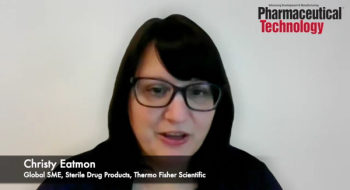
Christy Eatmon of Thermo Fisher Scientific reviewed her company’s experience at CPHI Americas 2025 and discussed recent industry trends that are driving strategic partnerships.

MHRA approves Loba Biotech to manufacture Pegasys API, enabling pharma& to strengthen UK supply and ensure continued access for eligible patients.

The concerns of industry experts expressed at INTERPHEX in April 2025 are still pertinent in an uncertain global political climate.

Sanofi is acquiring Vigil Neuroscience, a biotech firm focused on novel neurodegenerative disease therapies, to boost its early-stage neurology pipeline.

Emerson’s purpose-built industrial AI solutions are meant to enhance accessibility and reliability, enabling manufacturers to maximize efficiency and performance from automation systems.

FDA announced efforts to streamline its drug importation process to help U.S. states and Native American tribes access lower-cost Canadian drugs while maintaining safety standards.

In this exclusive Drug Digest video, Adi Kaushal from Lonza summarizes the current state of the oral solid dosage market, identifies the main challenges to drug developers, explains how CDMOs are leveraging expert techniques to improve OSD bioavailability, and looks into the future of advancements in drug delivery.

In this episode of the Ask the Expert video series, Susan J. Schniepp, distinguished fellow at Regulatory Compliance Associates, and Siegfried Schmitt, PhD, vice president, Technical at Parexel, discuss how to address an FDA warning letter citation for a failure to establish a quality control unit.

Mirai Bio and Thermo Fisher partner to integrate AI-driven design with CGMP manufacturing, aiming to streamline development of genetic medicines.

Grifols received FDA clearance to begin a Phase II trial of GRF312, an immunoglobulin eye drop for dry eye disease, aiming to improve current treatments.

Jamie Baumgartner, Jonathan Grinstein, and John Wilkerson go behind the headlines to discuss the implications of personalized gene-editing therapies, more HHS policy and funding updates, and the latest tariff-related investments.

Inobrodib is being developed as a first-in-class oral cancer drug that the company says will be able to treat not only multiple myeloma, but other specific cancers as well.

ACG partnered with Art of You to launch the world-first Personalised Capsule Machine, enabling on-demand, customized supplement capsules based on individual health data.

The LP.8.1 variant of the SARS-CoV-2 virus differs from the JN.1 family that previous vaccines had been designed to target, and has surpassed JN.1 as the variant circulating most widely worldwide.

Researchers say they have discovered the first drug mechanism that binds to the pyrin domain to block NLRP3 and prevent a series of reactions resulting in inflammation.

Merck will have early-stage opportunities to help startups set up for future success in the pharmaceutical and life sciences fields.

Six winners and two honorable mentions were revealed at ISPE’s Europe Annual Conference in London.

According to the White House, the order builds on actions taken in the president’s first term to reduce price disparities domestically.

The proposed $700 million, 700,000-square-foot space will support the companies’ future joint portfolio of next-generation obesity medicines.

The company said the investment is in response not only to customer demand and a belief in the value of US-based innovation, but also because of the trend toward US onshoring brought about by new tariff policies.

Poor API quality may often lead to delays in production and a shortage of supply.

Calquence (acalabrutinib) plus bendamustine and rituximab reduced risk for disease progression or death by 27% compared with the current standard of care, according to a phase III trial.

Scientific, economic, and practical factors should be considered when choosing between the frozen state and lyophilization.

The PharmTech Group interviewed Edwin Stone, CEO of Cellular Origins, about how geopolitical instability in Europe, and beyond, has impacted the bio/pharmaceutical supply chain.
FDA chooses Dr. Vinay Prasad, MD, MPH, a hematologist-oncologist, to lead the Center for Biologics Evaluation and Research at FDA.

This article explores the impact of test volume, microbial distribution, and dilution errors on bioburden testing variability. It presents statistical approaches to estimate percentage error and discusses strategies to optimize microbial enumeration techniques in biopharmaceutical quality control.

The White House is instructing FDA to increase fees for and inspections of foreign drug manufacturing plants and reduce the time required to approve such sites that will be newly constructed in the US.
The company said the expansion is in response to globally rising demand for inhaled biologics, which offer distinct advantages in route of administration, but can be challenging products for developers.

BioPharm International® spoke with Lun Xin, associate director at WuXi Biologics, about high-concentration biologics and some of the biggest challenges associated with their formulation.