






Quality Systems
Latest News
Advertisement
Latest Videos









Shorts

0:16
How the EMA is Speeding Up New Drug Approvals
2 months ago
by
Susan Haigney
0:16
FDA's New Plan to Improve Supply Chain Visibility
2 months ago
by
Susan Haigney

0:26
What Is an Intermediate Hold Time
3 months ago
by
Robert Dream
0:29
Why Biologics Are High-Risk to Manufacture
3 months ago
by
Robert Dream(+1 more)

0:18
Regulatory Authorities are Becoming Data-Driven
3 months ago
by
Jason Bock(+1 more)
0:26
Why Traditional Pharma Supply Chains Fail Personalized Therapies
3 months ago
by
Jason Bock(+1 more)
0:24
The FDA's Surprising Role in Shaping Future Therapies
3 months ago
by
Jason Bock(+1 more)

0:26
The Hidden Risk in Regulatory Information Flows
3 months ago
by
Siegfried Schmitt(+1 more)

0:18
Common Mistake: USP and EP Method Verification
3 months ago
by
Susan J. Schniepp(+1 more)

0:12
What To Do When AI Fails
3 months ago
by
Zachary Zubulake
Advertisement
More News

BioPhorum launches a 20-member collaboration uniting pharma, CDMOs, and regulators to address manufacturing challenges in small molecule drug production.

FDA has approved Tregzi, the first regulatory T-cell therapy shown to reduce chronic GVHD and improve survival in blood cancer transplant patients.

The company’s thyroid eye disease treatment will be the first at-home subcutaneous disease-modifying treatment if approved.

This episode of Ask the Expert takes a look at recent regulatory actions impacting biologics manufacturers.

The FDA again rejected Unicycive's oxylanthanum carbonate over third-party manufacturing compliance, not safety, spotlighting CMC risk in nanoparticle drug development.
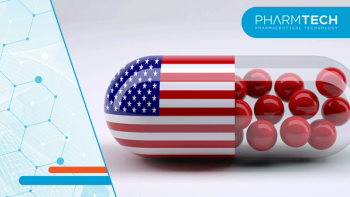
The companies have been selected to participate in the pilot program to expand domestic pharmaceutical manufacturing and strengthen the US drug supply chain.

Documentation reliability across CDMOs, CROs, and other contractors should be engineered into quality systems before, during, and after execution, not patched together at submission or inspection time.

This week, the industrialization of advanced biologics, sustained regulatory and investment momentum behind next-generation therapeutics, and an ongoing push across the supply chain to improve standardization and efficiency were themes covered on PharmTech.

AI is reshaping GMP documentation and quality workflows, but human accountability remains non-negotiable, and the regulatory consequences for over-relying on AI are real.

What pharma’s regulatory writers can borrow from clinical AI before the next inspection.
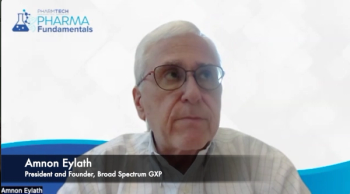
This episode of Pharma Fundamentals explains the difference between a quality system for biologics compared with small-molecule drugs and the Parenteral Drug Association’s revision to Technical Report No. 56.

The agency approved palbociclib with trastuzumab, with or without pertuzumab, and endocrine therapy for the maintenance treatment of HR-positive, HER2-positive metastatic breast cancer.

The FDA's revised draft guidance updates master protocol recommendations on randomization, control groups, blinding, and regulatory submissions for multi-drug trials.

IPEC’s EIP user guide streamlines information exchange and response times while increasing accuracy through standardization.

PharmTech Europe's June 2026 issue reflects the convergence of compliance burden, cost pressure, analytical complexity, and patient access.

AI governance, nitrosamine risks, and surging US manufacturing investment reshape quality systems, deals, and workforce needs.

First generic of single-dose flu drug baloxavir marboxil approved by FDA ahead of 2026–2027 season, expanding antiviral access and manufacturing competition.

A comprehensive approach to long-term sustainability efforts in pharmaceutical manufacturing should prioritize simpler frameworks that curb costs, risks, and variability.

Duloxetine was recalled over excess nitrosamine impurity, renewing scrutiny of process controls across generic drug manufacturing.

Attention around pharmacovigilance transformation potential has tended to focus on automating discrete steps in the case-processing pipeline. End-to-end ICSR autonomy may enable near-instantaneous case processing so that current SUSAR targets become obsolete.

As quality control labs move toward more connected, data-driven operations, digital technologies must be adopted in a way that upholds patient safety.

This week's headlines saw oncology investment; persistent pressure on supply chain resilience and drug availability; and the importance of operational readiness.

The EMA’s annual report shows the agency approved 104 human drugs in 2025 that included first-in-class and first-in-indication therapies.
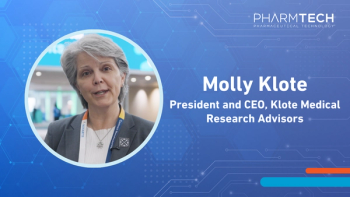
Molly Klote, Klote Medical Research Advisors, discusses how pharma must move beyond tariff-driven reactions to build evidence-based, quality-led supply chain resilience that satisfies FDA scrutiny and protects patient access.

Nicholas Richardson, vice president of clinical development at Precision for Medicine, explains why radiopharmaceuticals are unique for patients with cancer and what makes them challenging to develop for those patients.
Advertisement
Advertisement
Trending on Pharmaceutical Technology
1
Formulation Strategies for Next-Generation Multiagonists
2
Manufacturing Intelligence: What FDA's Real-World Use Case Database Means for CMC
3
MASH and Cardiomyopathy Targets: Why AstraZeneca Chose insitro’s AI
4
NVIDIA’s $250M Agentic AI Safety Bet: What GMP Gains
5